What now has Starlink
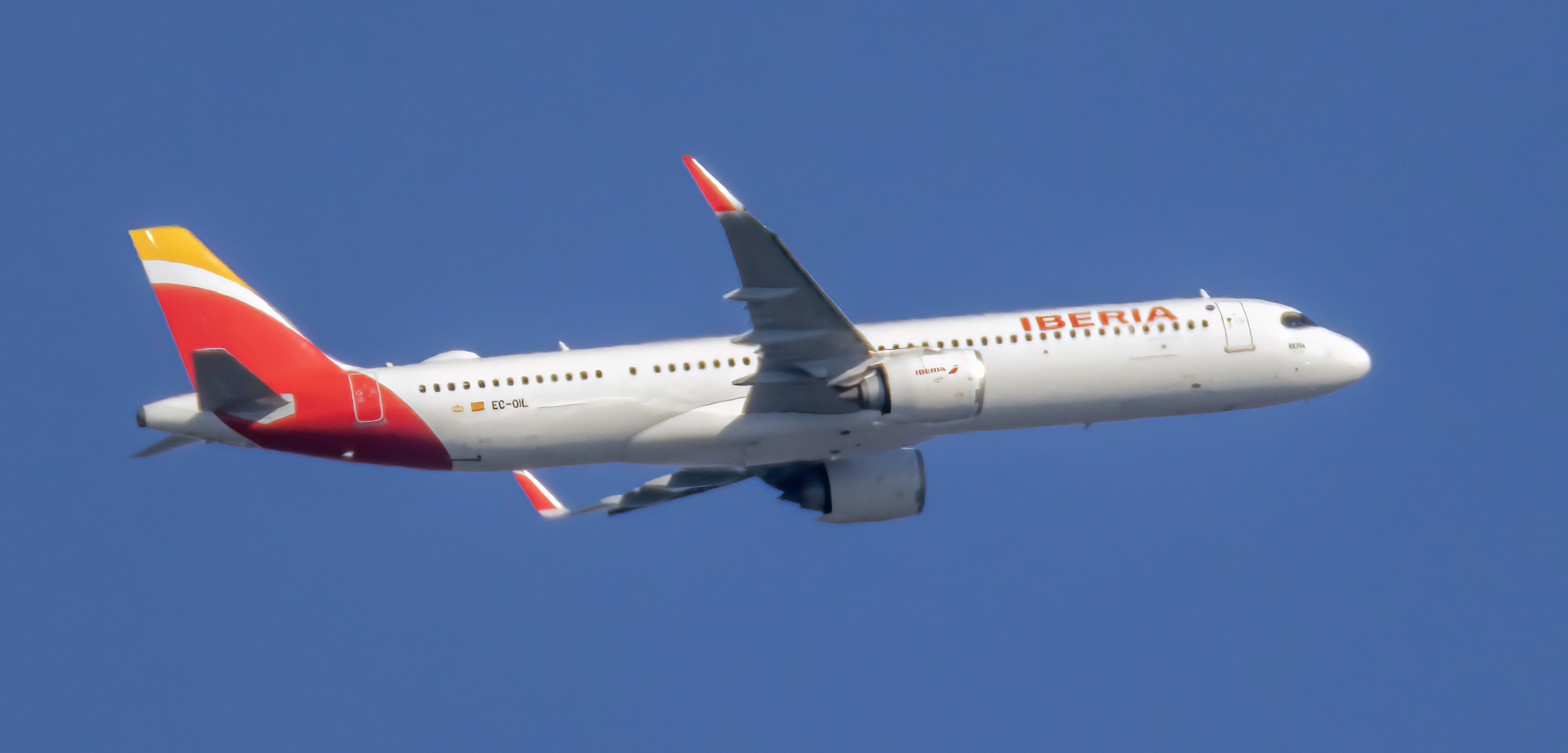
Iberia says all eight of its current A321XLRs now have free Starlink internet, regardless of cabin or fare type. The November 12, 2026 announcement completes that aircraft subfleet; other Iberia aircraft are still being fitted, and onboard access and call rules still apply.
The final A321XLR to receive the system was EC-OIL, which had left Iberia’s La Muñoza maintenance facilities when the announcement was issued. Iberia describes the installation as complete across the A321XLR aircraft it currently operates, a milestone also confirmed in its customer-service executive’s remarks.
Iberia places the A321XLR service on long-haul routes across the Americas, including the U.S. East Coast, Northeast Brazil and the Caribbean. Its named examples are Recife, Fortaleza, Santo Domingo, Puerto Rico, New York, Washington, Boston and Toronto. These are examples of routes currently served by the aircraft; the release does not provide a new flight timetable. Iberia also says it was the first Spanish airline to start implementing Starlink onboard.
Several A350s and A330s already have Starlink, according to the release, while installation continues across the rest of the long-haul fleet. The current guide describes a progressive rollout over the next two years and says progress will be communicated. It gives that relative timetable without naming a calendar completion date. The current A321XLR milestone therefore has a narrower scope than completion across every Iberia aircraft.
Free access and connecting onboard
Starlink access is complimentary for all customers on equipped aircraft. The release explicitly includes every fare type and cabin, while the guide says customers do not enter payment details or choose a plan. Its detailed aircraft qualifications limit the guide’s broad “all flights” language to the equipped service. Passengers still follow the connection portal’s access steps.
The guide lists Iberia Club members, members of partner programmes and customers who register during the flight as able to access the service. Its FAQ says prior registration is unnecessary: activate airplane mode, connect to the aircraft’s Wi-Fi and follow the portal instructions. A passenger who has not registered before boarding can follow the onboard portal process.
Use the steps in Iberia’s [official Starlink guide](https://www.iberia.com/es/on-board/wifi/starlink/): turn on airplane mode, select the “Iberia WiFi” network and open the connection portal’s welcome screen. Access it with an email address or frequent-flyer number. If the portal does not open, the guide directs passengers to starlink.iberia.com.
Speed, devices and working online
Iberia advertises speeds of up to 500 Mbps, compares performance with a home broadband connection and describes Starlink as more stable than traditional onboard systems. Its guide explains that SpaceX’s constellation uses thousands of low-Earth-orbit satellites around 550 km from Earth. It quotes latency of around 25 ms, compared with more than 600 ms for older satellite technologies. These are the airline’s published performance comparisons.
Multiple devices can connect simultaneously. The guide specifically names a mobile phone, tablet and laptop, and says customers do not have to choose between them. Neither source specifies a numerical device cap.
The guide illustrates streaming films and series, work, social media, real-time gaming and online shopping. Its FAQ says Starlink is designed for video streaming, video calls and applications passengers normally use, but that the experience may vary with flight conditions.
VPN connections and cloud-based work tools should function normally in most cases, the FAQ says. For specific corporate connectivity requirements, Iberia recommends checking with the traveler’s IT department.
Coverage from the gate
The FAQ describes coverage for most of the flight, including transpolar routes, while allowing for brief interruptions caused by technical or traffic reasons. It calls those interruptions exceptional, qualifying the guide’s broader language about stable, uninterrupted connectivity.
On equipped aircraft, the guide describes gate-to-gate access from embarkation to disembarkation, without waiting to reach cruising altitude. It also says ground availability on some routes may be subject to local air regulations in the origin or destination country.
Calls, quiet periods and content rules
Iberia tells passengers to keep devices in silent mode, always use headphones for music, videos and calls, and keep their voice low when making or receiving a call. Viewing or downloading offensive or inappropriate content is strictly prohibited.
The rest periods follow the flight’s schedule and onboard service. On daytime flights, they run from the end of the snack service offered midway through the flight until the start of the second meal service. On nighttime flights, they run from the end of the first service until the start of the second meal service. Both voice and video calls are prohibited during those periods, and the FAQ recommends keeping devices silent so other passengers can rest. It provides service-based boundaries rather than fixed clock times.
Other aircraft and the wider programme
An aircraft without Starlink may still offer Iberia’s previous Wi-Fi service, with different prices and conditions. Consult the linked [other onboard Wi-Fi information](https://www.iberia.com/es/a-bordo/wifi/) for that service rather than applying the free-Starlink terms automatically. The guide expressly identifies EC-ILS, EC-LEI, EC-OAX and EC-OAV as currently having no onboard Wi-Fi service. It does not provide a new installation date for those registrations.
Iberia places the connectivity work within its wider Flight Plan 2030, backed by a €6 billion investment. The same release quotes fleet growth from 43 aircraft when the plan began to 51 currently, with a target of around 70, and lists AI, dining improvements, an upcoming cabin retrofit and the recently opened Emerald Sorolla Lounge in Madrid-Barajas Terminal 4 among the wider initiatives. The investment figure covers that broader strategy rather than being presented as a Starlink-only budget.