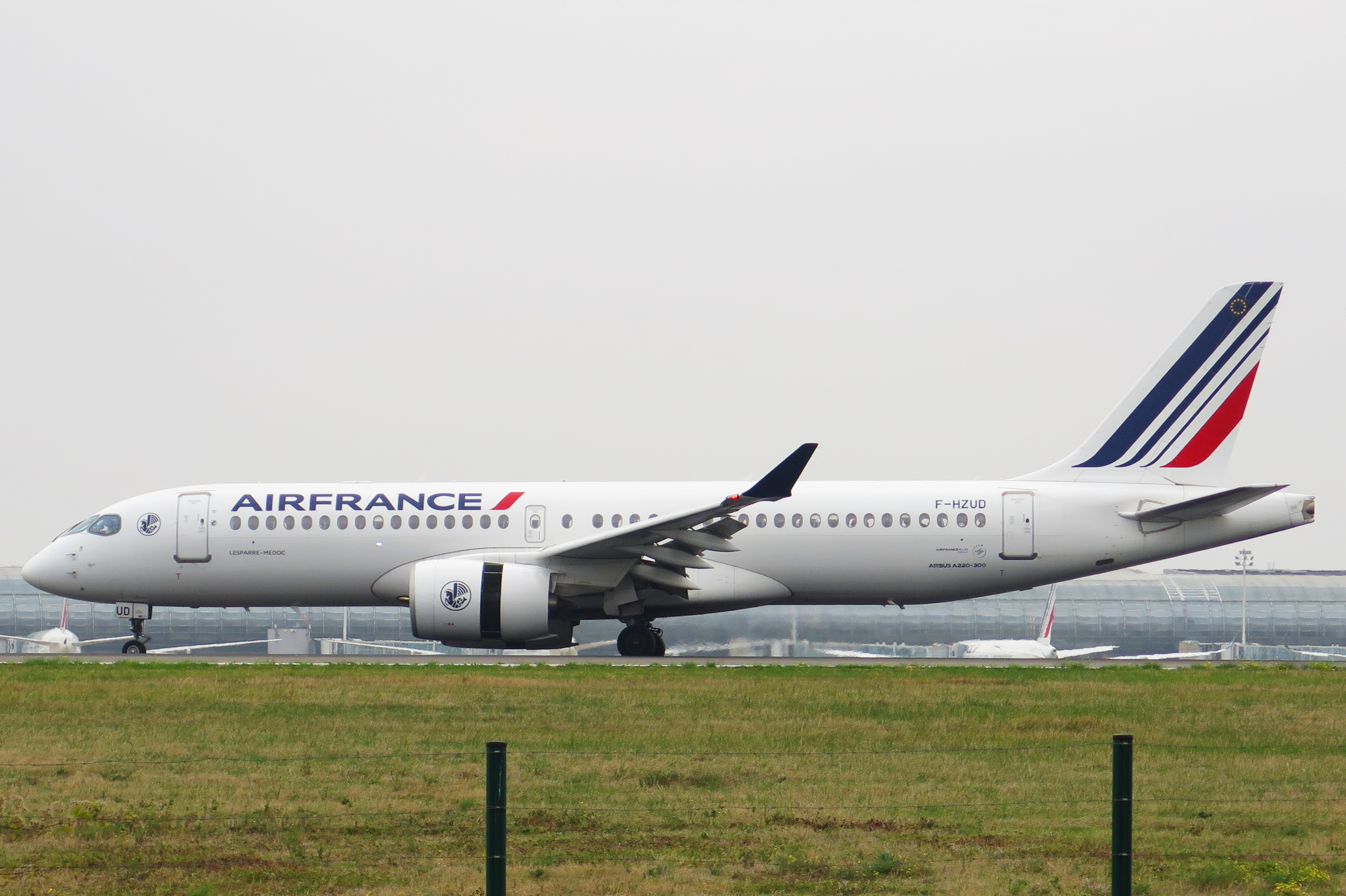
The A220 update and Mimizan delivery
Air France says 85% of its A220s in service already offer free high-speed Wi-Fi. Its November 6 update sets February 2027 as the target for upgrading the remaining aircraft, alongside the delivery of its 60th A220, “Mimizan.”
The latest delivery arrived on November 6, 2026. Registered F-HOZJ and named Mimizan, it joins the fleet about five years after F-HZUA, Le Bourget. Air France says the newly delivered aircraft will carry its first customers in the coming days; the announcement does not identify its first commercial flight number or route.
The Wi-Fi update separates aircraft already in service from later deliveries. Air France plans to upgrade aircraft that do not yet have high-speed Wi-Fi by February 2027. Starting with the 61st A220, new deliveries are to receive the technology during post-delivery work and before their first commercial flight. The announcement does not specifically confirm the equipment status of the newly delivered Mimizan.
The network and cabin behind the update
The A220 now serves 50 destinations in Air France’s short- and medium-haul network, either by itself or alongside A320-family aircraft. The airline names Nice, Istanbul, Geneva and Brest as examples and says nearly 24 million customers have flown on the type over five years. These are network and usage figures, rather than a new route list for Mimizan.
The cabin has 148 seats. Its five-abreast layout gives 80% of passengers a window or aisle seat, according to Air France. That seating figure describes the cabin layout; the separately reported 85% describes the proportion of A220 aircraft in service equipped with the new high-speed connection.
Who can use the free service
The current official Wi-Fi guide describes free, unlimited high-speed service on equipped aircraft for Flying Blue members, with free membership. Air France’s earlier rollout announcement says the service is free in every travel cabin through Flying Blue login. The benefit concerns the high-speed-equipped aircraft, not an assurance that every flight already provides it.
Travelers without a Flying Blue account can create an account before travel or on board. The current guide tells members to keep their login details available because they are needed to connect. The earlier service announcement identifies Flying Blue as the Air France–KLM group’s frequent-flyer programme and also describes free account creation on board.
Aircraft without the new high-speed system still have a different offer. The current guide describes a free Message Pass and a paid Wi-Fi Pass. Air France’s earlier rollout notice specifies free messaging for Flying Blue members and a paid option for other uses, with a free offer for Flying Blue Ultimate and La Première customers. It separately notes that La Première customers connect directly. These exceptions are part of Air France’s general programme guidance.
Connecting on board
- To connect, activate airplane mode and select “AirFranceWifi” in the device’s Wi-Fi settings. Air France says a VPN should be turned off during the connection process. Its FAQ confirms that a VPN or private relay can be used again after the connection is established; the instruction is a temporary login step.
- Open the AirFranceWifi login portal. If it does not appear automatically, enter wifi.airfrance.com in the browser. Then sign in with the Flying Blue email address or membership number and password. These are the official connection steps for the onboard service.
- The onboard guide asks passengers to use electronic devices discreetly to keep the cabin quiet. It also asks passengers not to photograph or film other travelers or crew without their permission. These courtesy requests apply alongside the connection instructions and help explain the airline’s expectations for using the service on board.
Equipment limits and the rollout timetable
Air France’s current FAQ says an aircraft assignment can change until the day of departure. It therefore cannot confirm at booking which Wi-Fi offering a flight will have. The reported A220 equipment percentage should not be treated as a guarantee for an individual booking, and the delivery update does not publish a country-by-country service list.
For context, the September 8, 2025 rollout notice described the service as newly operational following its autumn 2024 announcement. At that point, two Embraer 190s and two A220s were equipped, and an A350 was due to be equipped that week. Air France was preparing its fifth equipped aircraft and described itself as the first major European airline offering the service. Those are historical milestones, not current fleet counts.
The September 2025 notice targeted high-speed Wi-Fi on 30% of the entire fleet by the end of that year and throughout the fleet by the end of 2026, including regional aircraft. The newer November 2026 update instead gives an A220-specific remaining-upgrade target of February 2027. For A220 planning, the newer subfleet update should be read alongside the individual-flight equipment caveat, rather than treating the older overall target as proof of completion.
On equipped aircraft, the service supports staying in touch, remote work, browsing, streaming television, films and series, and multiplayer games. The rollout announcement describes access from smartphones, tablets and laptops, including simultaneous use of multiple devices. Starlink supplies the high-speed, low-latency connection through satellites in low-Earth orbit.
The aircraft’s name and fleet-renewal context
Air France links the A220’s introduction to training across its operations: 720 pilots and 1,800 cabin crew have received type-specific training, 300 mechanics are certified and 460 ground staff are prepared to handle the aircraft. The airline reports receiving 12 to 15 A220s each year, including during the Covid period.
The new aircraft’s name continues Air France’s practice of honoring French towns associated with aviation or cultural heritage. Mimizan is a seaside resort on the Côte d’Argent in the Landes region; the airline highlights its aerodrome, recreational flying and skydiving school as the aviation connection behind the name.
Air France says its A220s produce 20% less CO₂ and have a 34% smaller noise footprint than the aircraft they replace. It describes fleet renewal as its principal near-term way to reduce emissions and noise. These are the airline’s comparative claims, with the comparison tied to replaced aircraft rather than every aircraft type.
The update says the Air France–KLM Group devotes nearly €2 billion a year to fleet renewal. New-generation aircraft represent 39% of the Group’s fleet, with a target of up to 80% by 2030. Those Group-wide investment and fleet measures are separate from Air France’s A220 count and its Wi-Fi installation percentage.