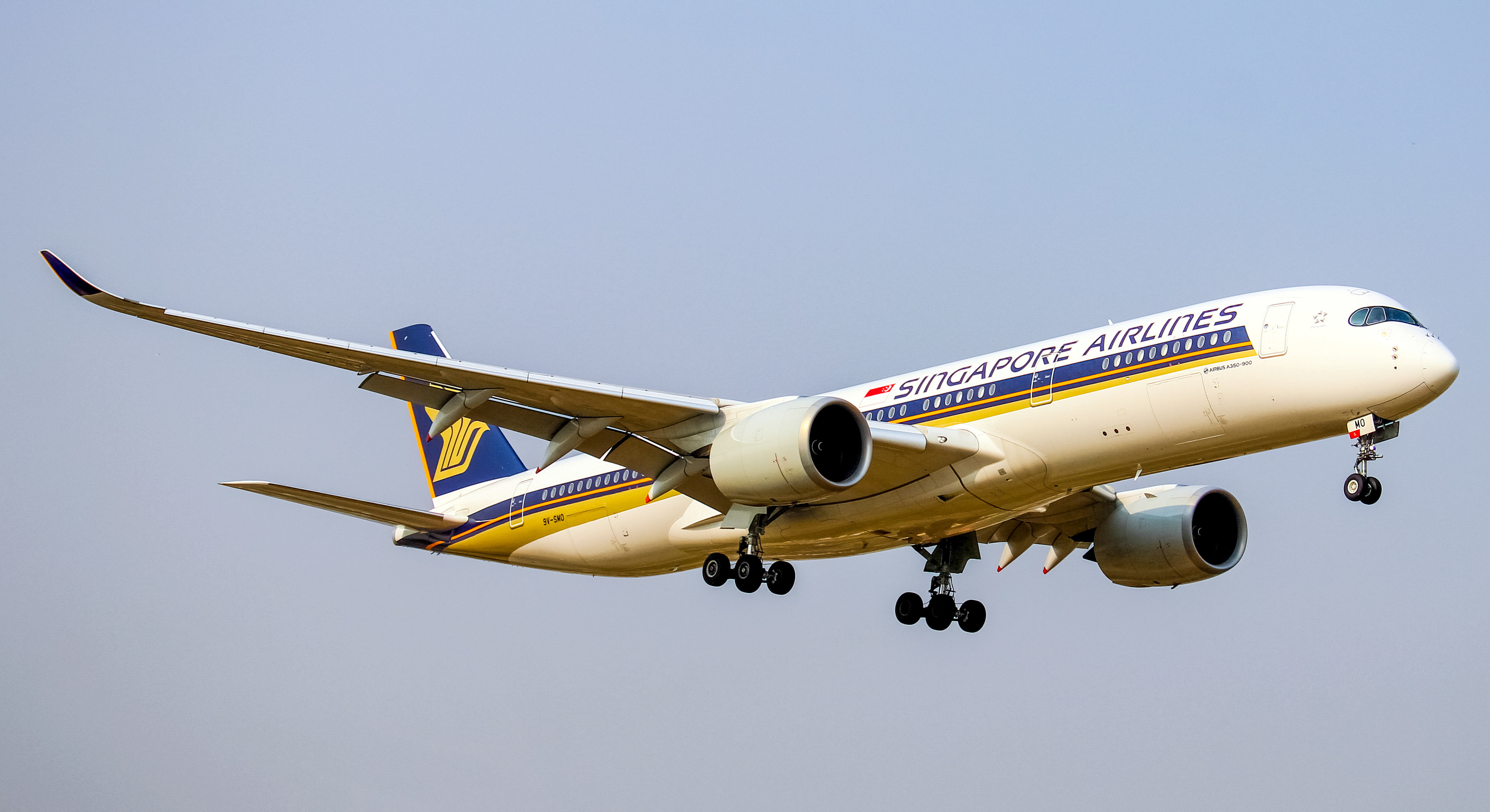
A cabin reveal with a separate service timetable
Singapore Airlines plans to unveil its next cabin generation on Friday, November 6, 2026. Entry into service is planned for the first quarter of 2027, following a delay to the original rollout.
The announcement covers a broader travel experience, with the airline describing changes across cabin classes and stages of the journey. OMAAT points to previews of a new dining concept and amenities as part of that context. How those elements fit together is something the unveiling should clarify; the preview language does not supply a complete product specification.
How the rollout has changed
When the programme was announced in November 2024, the standard long-haul A350-900 retrofit was due to reach passengers in the second quarter of 2026. The A350-900ULR was scheduled to follow in the first quarter of 2027, with the programme originally targeted for completion by the end of 2030. Those dates describe the original plan, rather than a newly confirmed completion schedule.
The reported service target has since moved to the first quarter of 2027 at the earliest. OMAAT expects some standard long-haul A350s to receive their new interiors before the ultra-long-range version does. That sequencing is an expectation, and the date remains a planned entry into service rather than proof that a particular flight will carry the new seats.
Supply chain constraints and a delay in certifying a new seat are behind the revised timetable. SIA Engineering Company will perform the aircraft work in Singapore. The distinction matters when following the project: a product presentation can happen before the physical retrofit and certification process has delivered an aircraft ready to carry passengers.
Which aircraft receive the work
The programme represents an investment of 1.1 billion Singapore dollars, approximately US$835 million in OMAAT’s report, across the entire long-haul A350-900 fleet. Its 41 aircraft include seven A350-900ULRs. ULR means ultra long range, and these aircraft operate the world’s longest flights, making the cabin changes particularly relevant to passengers spending extended periods on board.
The A350 name alone will not identify the new product. Aircraft configured for regional services are excluded from this retrofit. Their existing cabin products are shared with the airline’s Boeing 787-10s, so a regional A350 should not be confused with the long-haul aircraft covered by the investment.
The planned work extends beyond premium seats: it includes refreshed premium economy and economy cabins, an updated inflight entertainment system and installation of Starlink Wi-Fi. Business class receives a new product, while first class is being added to the ultra-long-range A350s. These are programme elements, rather than evidence that every aircraft already offers them.
How cabin capacity changes
| Detail | Information |
|---|---|
| Comparison | For the standard long-haul A350-900, the overall capacity rises from 253 to 258 seats. Business class remains at 42 seats and premium economy at 24. Economy grows from 187 to 192 seats, the five-seat increase described in the reporting. Premium cabin capacity therefore stays the same even as the aircraft gains additional economy seating. |
| Comparison | The ultra-long-range A350-900 changes more substantially. Its current 161 seats comprise 67 in business class and 94 in premium economy. The planned 132-seat configuration instead has four first class seats, 70 business class seats and 58 premium economy seats. The reported changes are four newly added first class seats, three extra business class seats and 36 fewer premium economy seats. |
Where the new premium products fit
First class is currently offered on Singapore Airlines’ A380s and 777-300ERs, according to OMAAT. The new design expands that offering to the A350-900ULR, while standard A350-900s will not receive it. The same product is intended for future 777-9s, with six seats on that aircraft compared with four on the A350. There are no plans to retrofit existing 777s with this design.
These seats are intended as Singapore Airlines’ long-term premium products and will also be used on newly delivered Boeing 777-9s. The airline originally planned to introduce its new premium cabins on that model, whose initial delivery schedule was 2020. OMAAT now puts delivery no earlier than late 2027, explaining why the A350 retrofit has become the nearer-term route to the next cabin generation.
The airline’s first class preview has so far offered limited official detail, centred on its intended premium experience. Its business class rendering is accompanied by promises of better privacy, comfort and convenience. Those are the stated design aims. The saved reporting does not establish a complete final seat specification, so the unveiling remains important for understanding the actual cabin experience.
The report also links to a cabin patent filed by Singapore Airlines, which OMAAT interprets as a possible 1-2-1 first class arrangement for the 777-9. Its reading of the proposal places individual suites by the windows and a double suite in the centre. That centre space could accommodate one or two people, with a partition separating travellers when needed. The author also describes staggered suites and a gently curved aisle as ways to increase suite width. These details explain the patent-based concept being discussed; they do not confirm the final production layout of the new cabin.
What to use when planning a trip
For travellers considering a flight specifically to try the product, keep the route discussion provisional. OMAAT identifies Sydney (SYD) and London (LHR) as likely early destinations because of the airline’s history of introducing new long-haul products there. That is the publisher’s forecast based on precedent, rather than an announced launch-route assignment; it should not be treated as a guarantee when choosing an itinerary.
Use the unveiling to assess the cabin, and the eventual service rollout to assess a trip. The November presentation and the planned first-quarter service introduction are different milestones. With the standard long-haul aircraft expected to precede the ultra-long-range aircraft, an initial business class debut would not by itself establish that the new A350 first class is flying.